
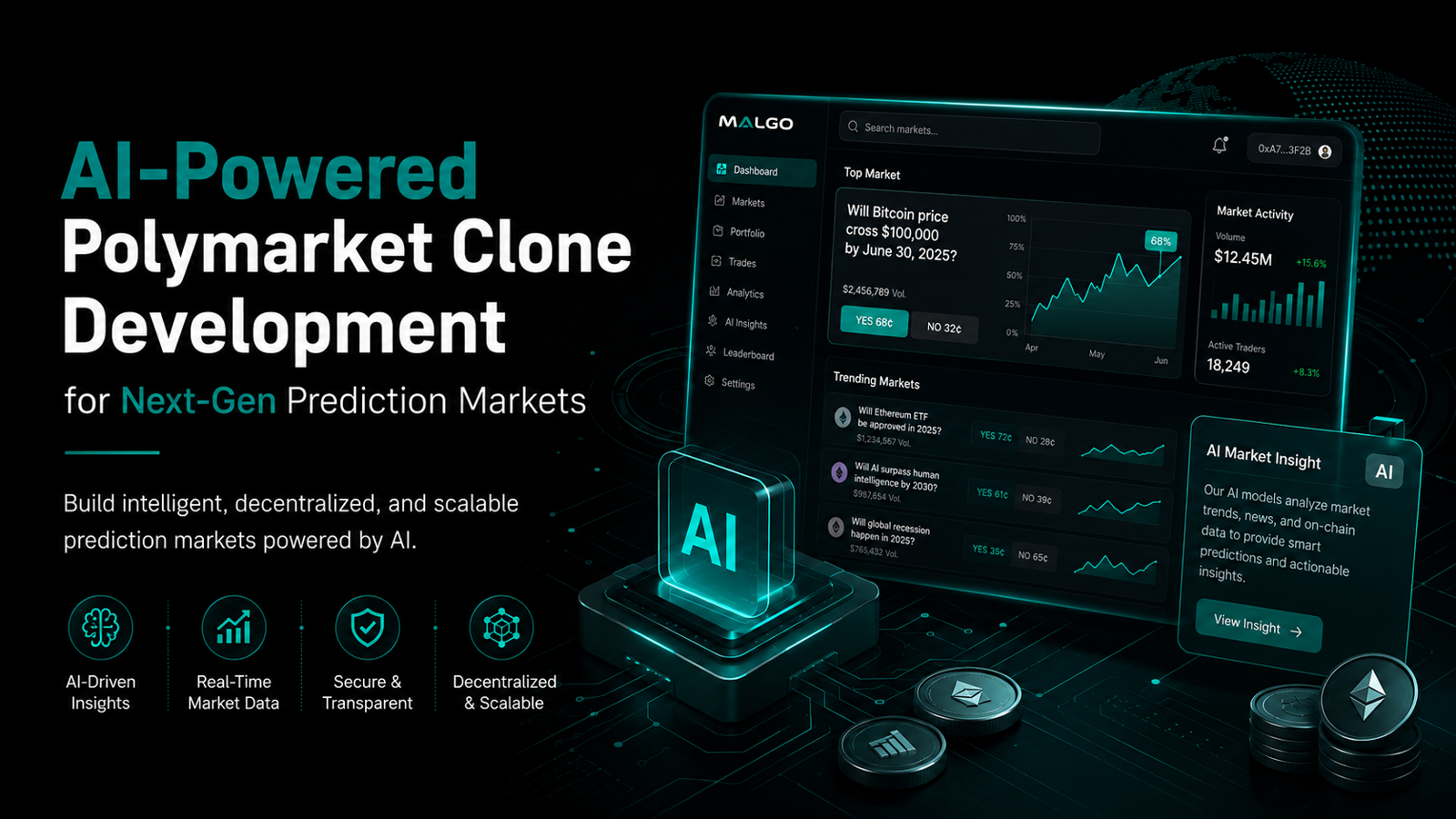
In the evolving Web3 ecosystem, Polymarket Clone Platforms are emerging as one of the most powerful solutions for entrepreneurs who want to enter the prediction market industry. These platforms replicate the core functionality of decentralized forecasting systems, enabling users to trade on the outcomes of real-world events using blockchain transparency and smart contract automation. With increasing demand for trustless information markets, building a custom solution has become a strategic move for crypto startups aiming to innovate in decentralized finance and Web3 applications.
This article explores how custom Polymarket-style prediction market solutions are built, the essential features they include, and why entrepreneurs are actively investing in them to scale their Web3 ventures.
Understanding Polymarket Clone Platforms in the Web3 Ecosystem
A Polymarket-style prediction market platform is a decentralized application where users can speculate on the outcome of events such as elections, crypto price movements, sports results, and global news. These platforms rely on blockchain networks to ensure transparency, immutability, and automated settlement through smart contracts.
Unlike traditional betting systems, prediction markets aggregate collective intelligence. The pricing mechanism reflects crowd sentiment and probability, making them valuable tools for forecasting real-world outcomes.
Custom-built versions of these platforms allow entrepreneurs to tailor governance models, liquidity mechanisms, and user incentives based on their business vision.
Why Crypto Entrepreneurs Are Investing in Prediction Market Solutions
The demand for decentralized prediction markets is growing due to several key factors:
Trustless environment: Blockchain removes centralized control and ensures fairness.
Global participation: Anyone with a crypto wallet can participate.
Transparent outcomes: Smart contracts execute settlements without manual intervention.
Data-driven forecasting: Markets generate real-time sentiment indicators.
For Web3 founders, launching a custom platform provides an opportunity to create niche forecasting ecosystems focused on sports, politics, DeFi trends, or entertainment industries.
Core Features of a Custom Polymarket-Style Platform
A robust prediction market solution is built with several essential components that define its performance, scalability, and user experience.
1. Smart Contract Infrastructure
Smart contracts form the backbone of the platform, automating trade execution, market creation, and settlement processes. They ensure fairness and eliminate the need for intermediaries.
2. Multi-Market Creation System
Users or administrators can create diverse prediction markets across categories such as crypto trends, global events, or niche community topics.
3. Liquidity Pools
Liquidity mechanisms ensure that markets remain active and tradable. Automated market makers (AMMs) are often integrated to stabilize pricing dynamics.
4. Wallet Integration
Support for Web3 wallets enables seamless onboarding, allowing users to connect, trade, and withdraw assets securely.
5. Oracle Integration
Reliable oracle systems are critical for fetching real-world data and validating event outcomes accurately.
6. Governance Framework
Decentralized governance allows token holders or community members to vote on platform upgrades and dispute resolutions.
Technology Stack Behind Custom Prediction Market Development
Building a scalable and secure prediction market platform requires a carefully selected tech stack:
Blockchain Networks: Ethereum, Polygon, Arbitrum, or BNB Chain
Smart Contracts: Solidity-based architecture for automation
Frontend Frameworks: React.js or Next.js for responsive interfaces
Backend Systems: Node.js or NestJS for API management
Databases: IPFS or decentralized storage systems for transparency
Oracles: Chainlink or similar decentralized data feeds
This combination ensures performance, scalability, and trustless execution across all platform operations.
Security and Compliance Considerations
Security is a non-negotiable aspect of Web3 prediction platforms. Since financial assets are involved, developers must implement:
Smart contract audits to eliminate vulnerabilities
Multi-signature wallet structures for administrative control
Anti-manipulation mechanisms for fair trading
Secure oracle validation to prevent data tampering
Additionally, compliance frameworks should be considered based on regional regulations, especially when dealing with event-based speculation markets.
Use Cases of Prediction Market Platforms
Custom prediction market solutions extend far beyond traditional betting concepts. They are being used in:
Crypto market forecasting for token price prediction
Political outcome tracking for elections and governance events
Sports analytics markets driven by fan engagement
Entertainment predictions including awards and media outcomes
DeFi sentiment analysis for protocol performance forecasting
These use cases demonstrate how decentralized prediction systems can evolve into powerful data intelligence tools.
Business Advantages for Web3 Entrepreneurs
Launching a tailored prediction market platform offers several strategic advantages:
Strong community engagement through participatory forecasting
Token-based economies that incentivize platform activity
Scalable architecture for global user adoption
Flexible monetization models based on transaction activity and ecosystem growth
Early entry advantage in a rapidly expanding Web3 niche
Entrepreneurs who invest in this space are not just building applications—they are creating data-driven financial ecosystems powered by collective intelligence.
Final Thoughts
The rise of decentralized forecasting systems has positioned prediction markets as a critical innovation in Web3. With the right development approach, entrepreneurs can build highly scalable and secure platforms that replicate and extend the capabilities of leading decentralized prediction systems.
Choosing expert-driven Polymarket Clone Platforms development services ensures that your solution is built with strong architecture, secure smart contracts, and a user-centric design that supports long-term growth in the decentralized economy.






Write a comment ...